
- User needs are inside of objectives
- They drive the functional aspects and content needs
- Identifying the user successfully leads to a flow effect of the entire project
- Have been used with user experience documentation since the mid 1990s
- They are referenced throughout our creative process, validate our designs and user experience
- Personas are representations of goals and behaviour of a hypothesised group of users
- Personas are extracted from data collected interviews with users
- They are captured with descriptives including behaviour patterns, goals, skills, attitudes, environment (context)
- Each product has more than one person
- That one person should be the primary faces for the design
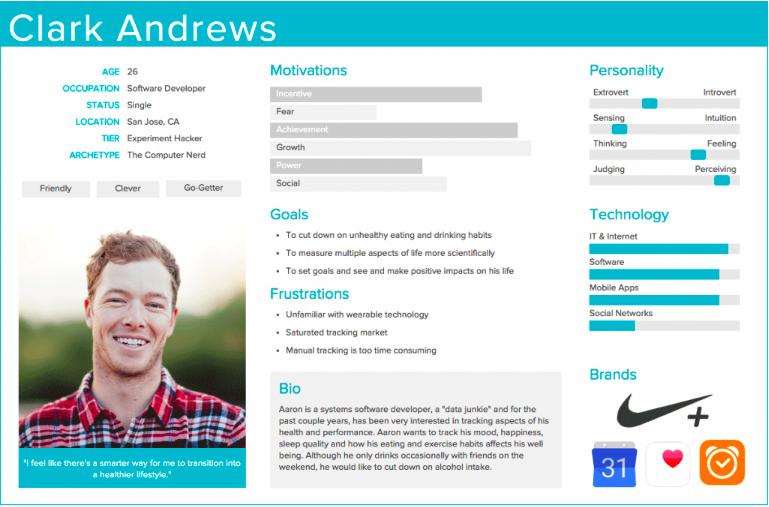
User Personas
- Age
- Occupation
- Sex
- Hoobies
- Like/Dislikes
- Other details
- Behaviour patterns
- Goals
- Skills
- Attitudes
- Environment
- Personas assist you in designing design a clear image of the user
- It is specific and gives shape to user base and avoids a vague or boring idea
- Reviewing personas before wireframe is very critical so it can create a sense of figure and pathway
Large vs small audience
- Who is your audience?
- Large audiences have a broad view

- Small personas have a more intimate and personal view
- When defining personas, what are the tasks and what are the users trying to perform?
- Ask yourself, are there different tasks for different personas?
- Defining personas can help uncover new cases
- Diving deeper, we find out how that user gets to the task in the first place
- Different personas = different parts
- What devices are the personas using?
- Are they expecting a cross platform experience?

- “Meet the users where they are”
- Users who want to browse vs users who want specific contents
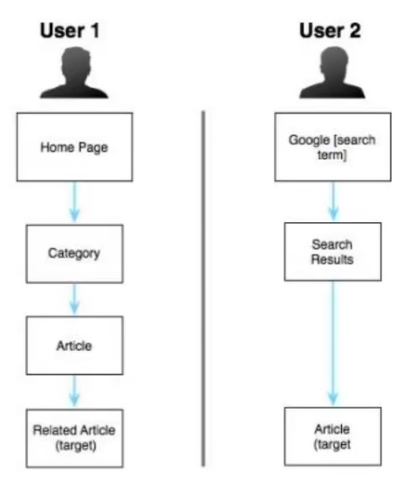
- Direct users where they want to go
Artefact personas
- Personas that are created to product, not the user
- Product personality questions are involved and arrange a desired personality
Reflection
- The lecture in Week 5 was revolved around personas. The pods mainly consisted of users personas, which are fictional characters that are created based upon research in order to represent different types that may be useful for a website. I found that the concept of user personas was a new piece of information to me. I was not aware that personas were created and it made me realise that they play a big role in marketing. The representation of personas forced me to reflect on my career as a graphic designer and illustrator – how my design work should involve the customer’s goals, points, behaviour and demographic information.
 Ana's Design Blog

